Leaders agree to biennial summits, institutionalize partnership and deepen cooperation on supply chains, critical minerals
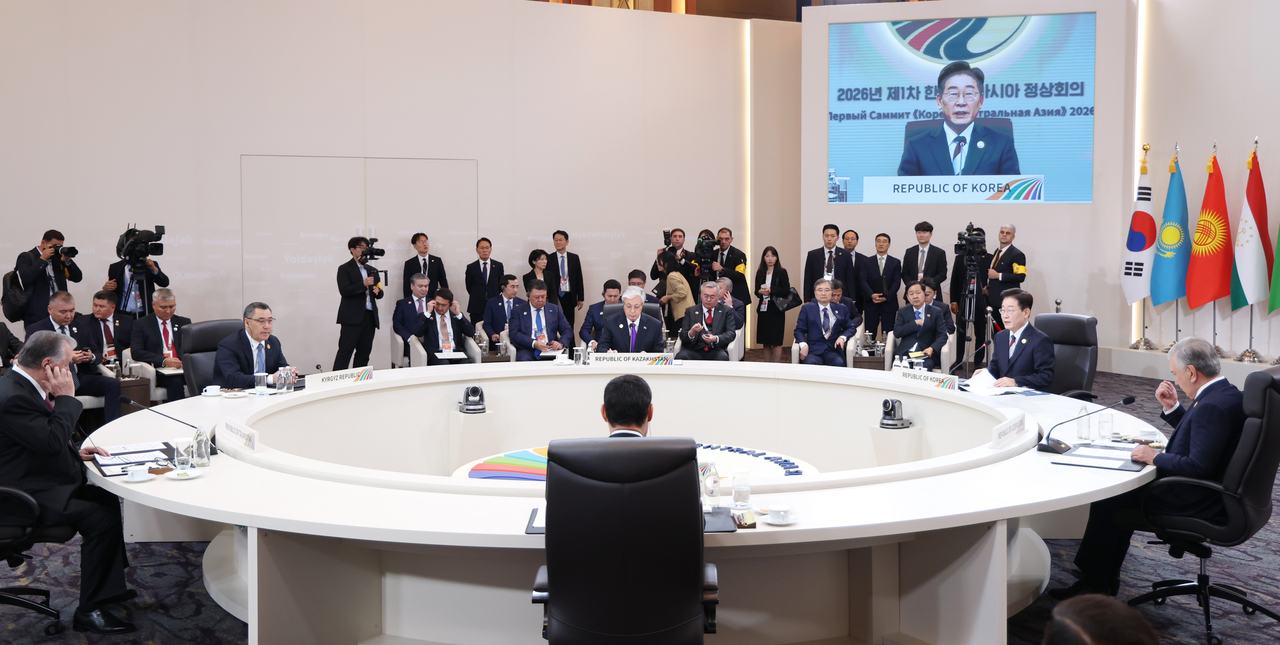
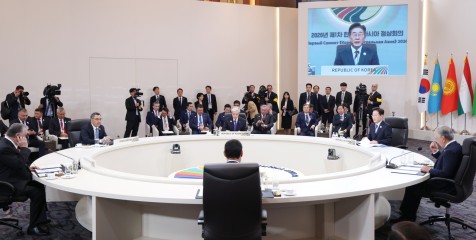
South Korea and five Central Asian countries on Wednesday laid the foundations for a lasting partnership at their first-ever summit, adopting the Seoul Declaration to institutionalize their ties and map out a shared vision for the next 30 years.
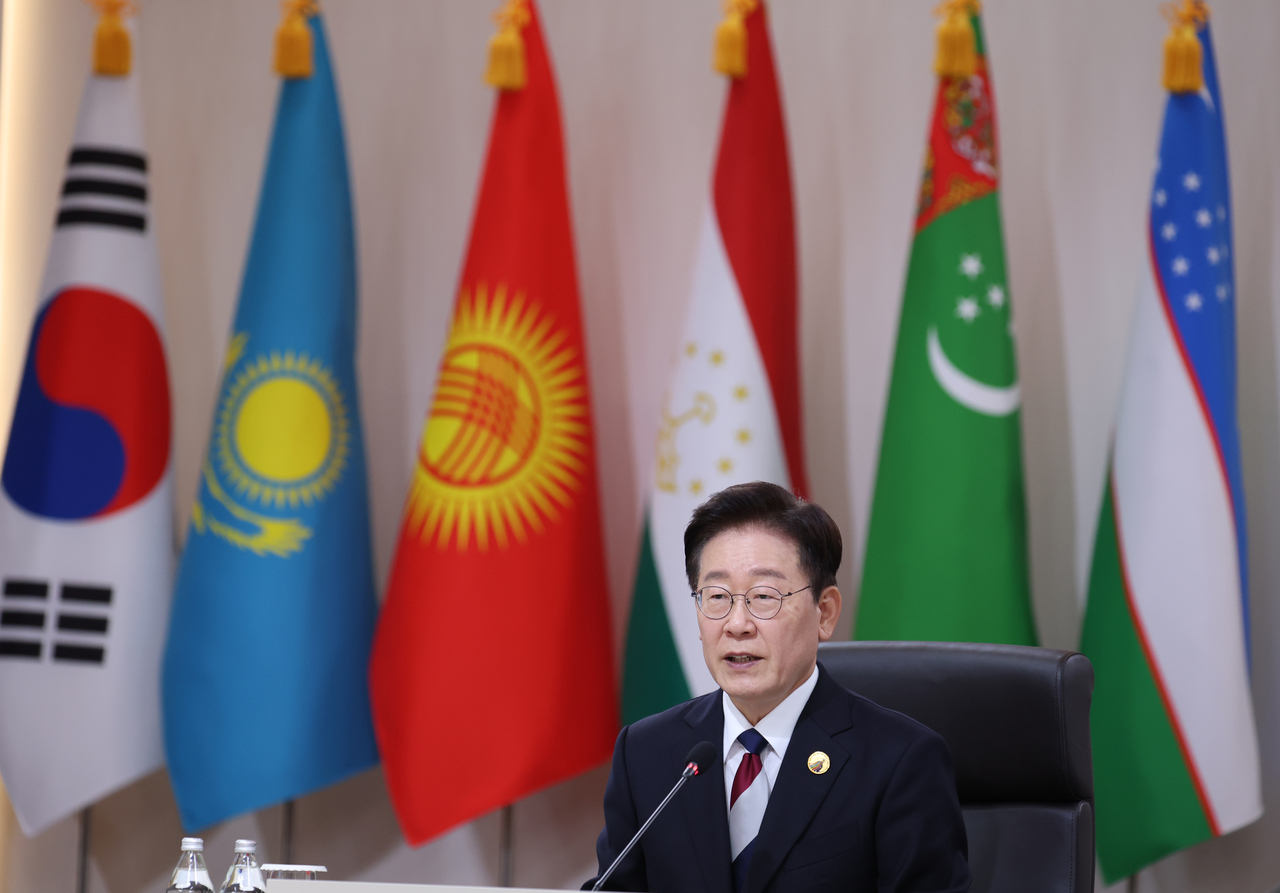
President Lee Jae Myung presided over the gathering, which focused on the future direction of Korea-Central Asia cooperation and ways to strengthen partnerships in innovation, prosperity and connectivity.
The Seoul summit was the first time the leaders of all five Central Asian countries had gathered with a South Korean president in a single event.
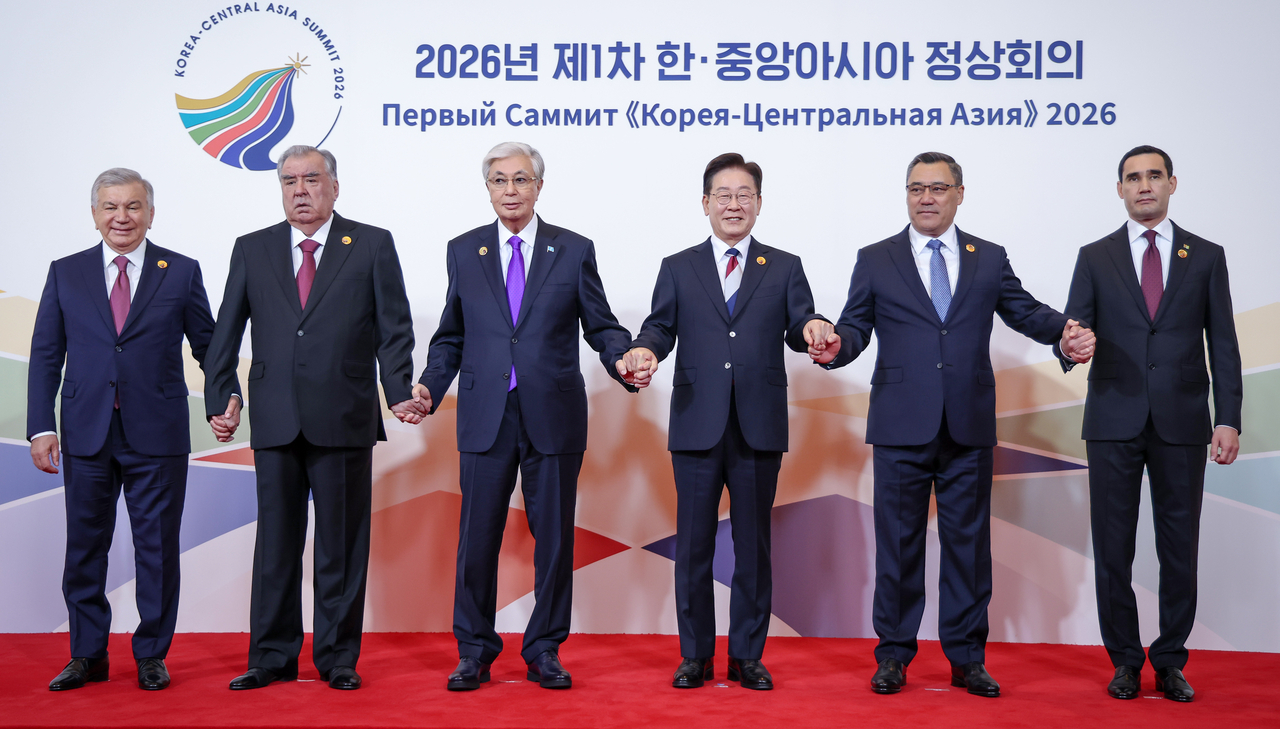
Joining Lee were Kazakhstan President Kassym-Jomart Tokayev, Kyrgyzstan President Sadyr Japarov, Tajikistan President Emomali Rahmon, Turkmenistan President Serdar Berdimuhamedov and Uzbekistan President Shavkat Mirziyoyev.
The Seoul Declaration distilled agreements reached at the summit into four broad areas: institutionalizing the Korea-Central Asia partnership; working together for peace and stability; building a future of innovation and prosperity; and deepening connections through people and trust.
Cheong Wa Dae said the declaration would serve as “a new milestone for South Korea and Central Asia as they open the next 30 years together.”
In the Seoul Declaration, the six leaders said the inaugural summit “marks a significant milestone in elevating cooperation between the Republic of Korea and Central Asia” and “provides a solid foundation for advancing the Korea-Central Asia relationship.” The Republic of Korea is South Korea's official name.
Against an “increasingly complex and fluid international situation” at both the global and regional levels, they said “there is a growing need to further enhance mutually beneficial cooperation” between South Korea and Central Asia.
The leaders also underscored the “importance of deepening a complementary and mutually beneficial partnership based on their respective strengths,” placing that complementarity at the center of the relationship going forward.
The summit capped a gradual institutional upgrading of South Korea’s engagement with Central Asia over more than three decades of diplomatic ties.
Seoul launched the Korea-Central Asia Cooperation Forum in 2007 at the vice-ministerial level, marking a shift from largely bilateral ties with individual countries toward a regional framework encompassing Central Asia as a whole. The forum was later elevated to the foreign ministerial level.
Wednesday’s summit took that framework to the highest political level, bringing together the South Korean president and all five Central Asian leaders for the first time. The gathering grew out of Seoul’s proposal in June 2024 to establish a leaders-level Korea-Central Asia forum, an initiative subsequently backed by all five countries.
Locking in long-term partnership
A central impetus of the Seoul Declaration is to turn that political commitment into a more durable institutional framework.
The leaders agreed to hold the summit every two years and use the ministerial-level Korea-Central Asia Cooperation Forum in the intervening years to review implementation and prepare the next agenda. Kazakhstan is set to host the second summit in Astana in 2028.
The leaders further agreed to “institutionalize consultations at various levels to identify and implement concrete projects for cooperation and further strengthen the strategic partnership” in the declaration.
Economic security features prominently, with the six countries launching an industrial ministers’ consultative mechanism and signing a memorandum of understanding on industrial and supply-chain cooperation.
The leaders notably agreed to “expand practical cooperation and establish a structured framework for economic collaboration, including resilient supply chains.”
Critical minerals sit at the center of that effort.
The declaration says Central Asia’s resources could play an “important role” in “enabling supply chain diversification and enhancing economic security,” while calling for “combining Central Asia’s abundant critical minerals with Korea’s advanced technologies” and building “joint value-added production chains.”
On security, the six leaders “reaffirmed their commitment to the complete denuclearization of the Korean Peninsula and the establishment of lasting peace on the Korean Peninsula.”
The security agenda extended beyond the peninsula, with the leaders highlighting the importance of the Central Asian Nuclear-Weapon-Free Zone in “strengthening the global nuclear nonproliferation regime, as well as regional cooperation and security.”
They also pledged closer cooperation in confronting terrorism, illicit drug trafficking, cyber threats and transnational crime.
Lee casts summit as start of new era
During the summit, Lee laid out a five-part vision for shared prosperity between South Korea and Central Asia, centered on partnership, peace, mutually beneficial practical cooperation, future-oriented cooperation and stronger people-to-people ties, Seong Ghi-hong, senior presidential secretary for public relations and communication, said in a post-summit briefing.
“President Lee stressed that this summit should not be a one-off meeting, but a new starting point for the future partnership, and that continued efforts to review implementation and identify new areas of cooperation should produce tangible results that improve people’s lives,” Seong said.
In his opening remarks, Lee underscored the significance of the inaugural gathering at a time when “the world is undergoing a transformation in which the economy and security are closely intertwined, from supply chains and energy to markets and technology.”
“The respective strengths of the Republic of Korea and Central Asia will offer boundless opportunities for us to work together to address our respective challenges,” Lee said.
“Above all, I am confident that when our cooperation expands beyond individual countries to the regional level, we can bring a future of shared prosperity closer.”
Lee underscored the summit's significance as an opportunity to “shape a new future and a new vision together.”
“We must now build on the foundation of cooperation laid over the past three decades and prepare together for a new 30 years ahead,” Lee said.
dagyumji@heraldcorp.com